Can You Walk From Dubrovnik Old Town To Lapad?
Yes, the Old Town and Lapad connect on foot along the shore past Gruž. Here is what the walk costs, what is free along the way, and when the bus makes more sense.
In Short
Yes, Dubrovnik Old Town and Lapad connect on foot, and the route is free to use end to end. The natural line runs out of the Old Town, along the shore towards Gruž with its harbour and morning produce market, and on to the Lapad promenade beside the bay. The Lapad promenade is itself a pedestrian zone, so the last stretch is reserved for walkers. Nothing on the route charges an entry fee.
This question sits inside the Lapad promenade guide, which covers the promenade itself in more depth.
Quick Facts
| Question | Answer |
|---|---|
| Can you walk it? | Yes, entirely on public ground |
| Entry cost of the route | Free |
| Gruž market | Free to enter, purchases are paid |
| Lapad promenade | Free, and a pedestrian zone |
| Lapad beaches | Free shore access, paid loungers |
| City Walls circuit | Paid, one ticket with Fort Lovrijenac |
Can You Walk From Dubrovnik Old Town To Lapad?
Yes, you can walk from Dubrovnik Old Town to Lapad, and doing so costs you nothing at all. No ticket, pass, reservation, or any other form of payment or booking is required. The walk is completely free and open to anyone who wants to make it on foot. The route leaves the walled core, follows the shoreline west, and finishes on the Lapad promenade, a pedestrian zone beside the bay where cars are not part of the picture. Both ends are free to be in: the Old Town's streets, gates and squares cost nothing, and the Lapad promenade is free to enter. The connection between them is ordinary public ground, and Gruž, with its market and harbour, sits on the way.
It helps to be clear about what "Lapad" means on the ground. It is the peninsula and district west of the Old Town, and its best known free feature is the promenade that runs along the bay, with beaches such as Copacabana and the Uvala Lapad beaches along its shoreline. The promenade is listed in the City of Dubrovnik's own public-order decision as a pedestrian zone, in the same breath as the whole Old Town. That is a strong signal for walkers: the ground at both ends of this route, and the final stretch in particular, is space the city has formally set aside for people on foot.
The route matters for budget planning because it stitches together several genuinely free places. You can leave through the Old Town gates, pass the harbour at Gruž, where the morning produce market is free to wander, and arrive at the Lapad promenade and its free shore access, all without a ticket of any kind. The contrast with the Old Town's headline attraction is stark: the City Walls circuit is a paid ticket, adult EUR 40 in the season from 1 March to 30 November 2026, and EUR 20 in December and January to February, with Fort Lovrijenac on the same single ticket. Walking beneath the walls, through Pile Gate and along Stradun is free; walking on top of them is not, a split worth keeping straight before you set off westward.
One thing this route does not do is put you inside any paid attraction. The Franciscan church is free to enter while its cloister and Old Pharmacy cost EUR 8; the Dubrovnik Museums charge admission; none of that touches the walk itself. If your day is built around the free side of the city, the Old Town to Lapad connection is one of the cleanest free links in Dubrovnik, and it pairs naturally with a free GuruWalk walking tour in the Old Town before you head out. The Pearl of the Adriatic Walk, for instance, rated 4.92 out of 5 across 5,844 GuruWalk reviews, runs in English for 1 hour 45 minutes and meets at Pile Gate, which sits at the western edge of the Old Town where a walk towards Lapad would naturally begin.
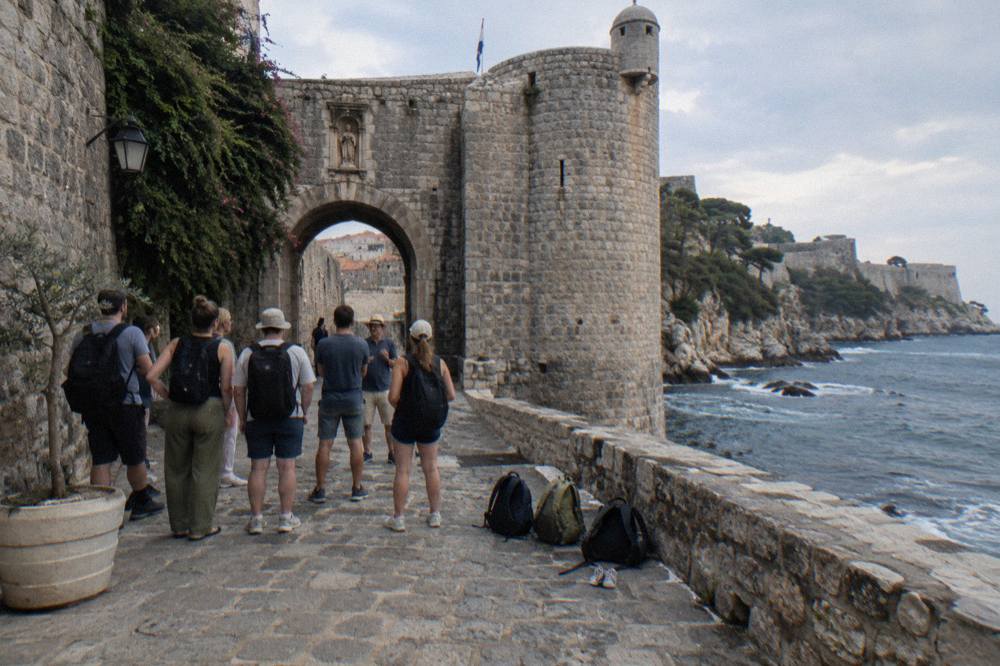
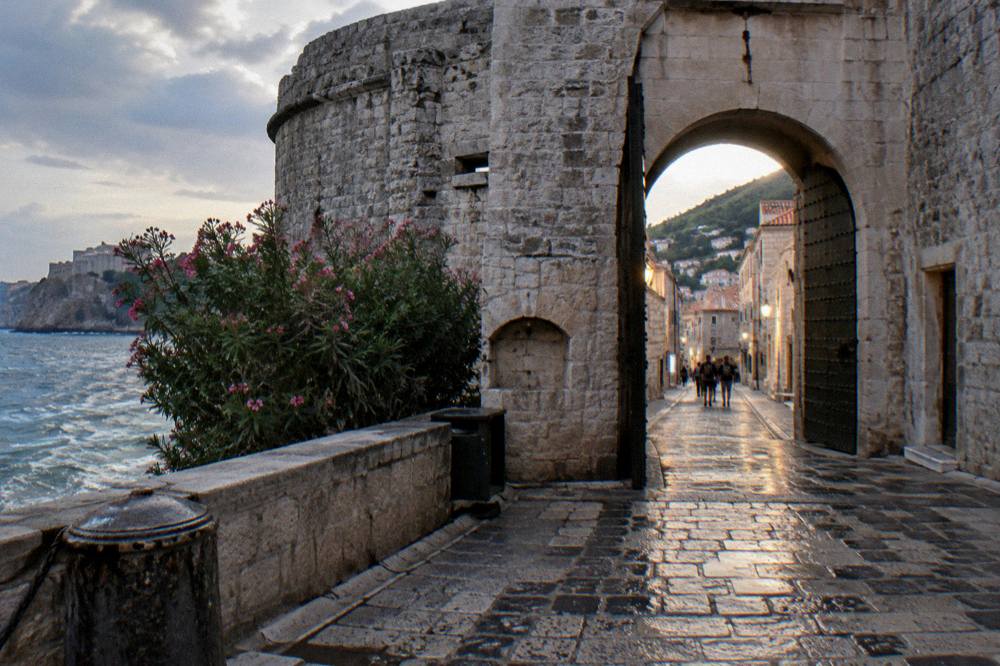
Between the two districts there is no fence, checkpoint or gate. The Old Town's own gates, Pile Gate on the west side and Ploče Gate on the east, are free to pass through, and beyond them the city opens into ordinary streets and shore. This is worth saying plainly because visitors sometimes assume the whole of central Dubrovnik sits behind the walls ticket. It does not. The walls circuit is the paid thing, and everything at street level around it, including the entire road towards Lapad, is public.
How Long Is The Walk?
The walk between the two districts is short enough that walking is a completely normal way to make the trip, and there is no need to treat it as a commute. Many visitors actually treat the promenade itself as the destination rather than a corridor, strolling its length for the experience rather than simply passing through to reach the other end. The honest answer on minutes is that no verified figure exists for the point to point time, and it depends entirely on your pace, your stops and whether Gruž market pulls you in. What can be said firmly is that the route stays at sea level, follows the shore for most of its length, and ends on flat, car-free ground. If timing matters to you, a map app will give a live estimate for your exact start point.
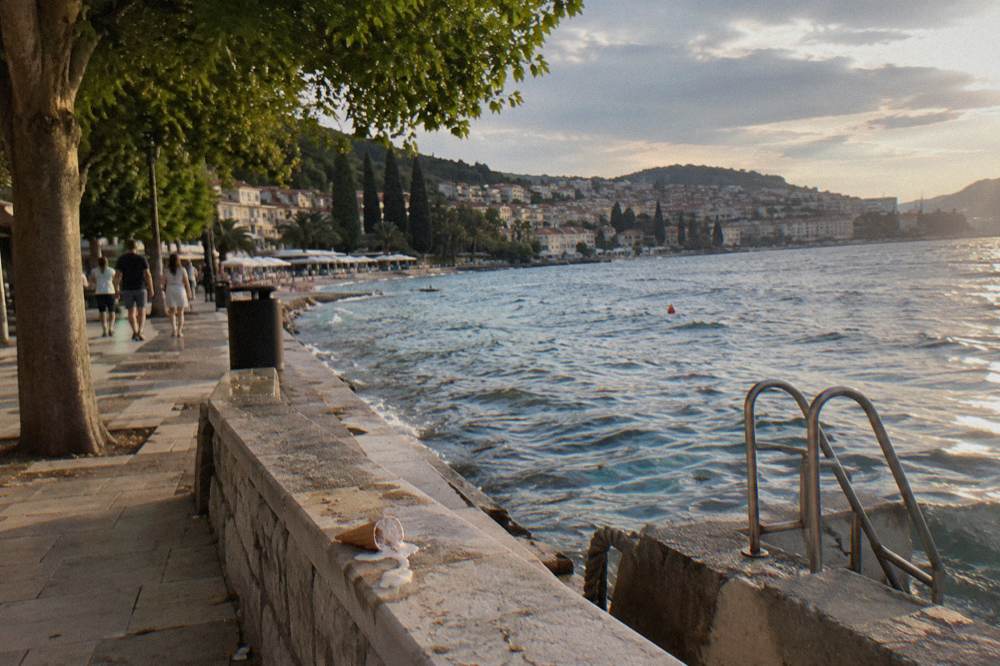
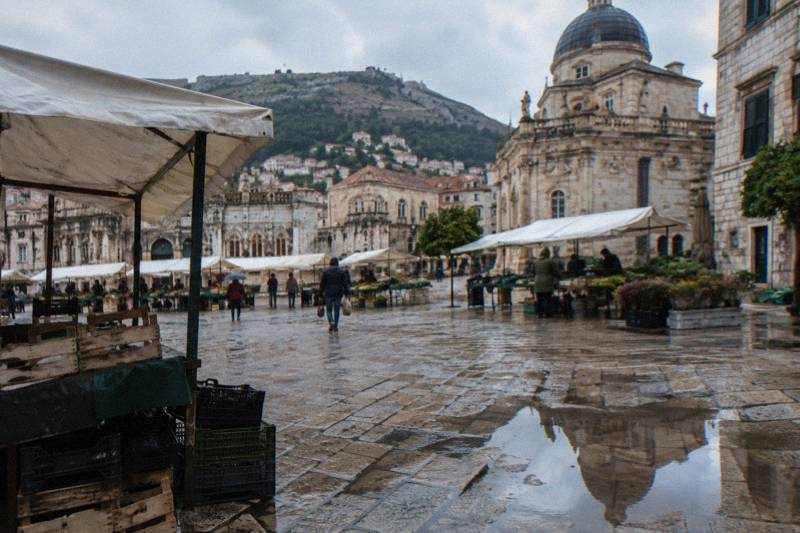
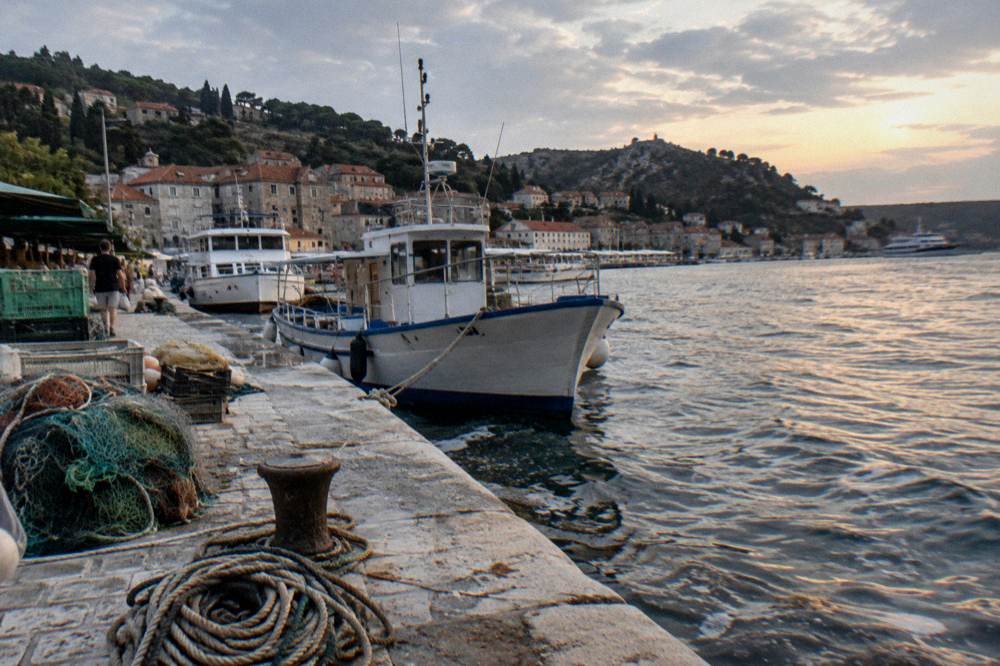
The shape of the walk is simple. From the Old Town you head west and north along the coast, with the water on one side for most of the way. Gruž harbour and its market make a natural halfway marker, and the market is worth planning around rather than rushing past: entry is free, the produce is paid, and it is one of the few places in Dubrovnik where the free experience and the paid one sit side by side in the same stalls. The Gruž market and harbour guide covers what to expect there.
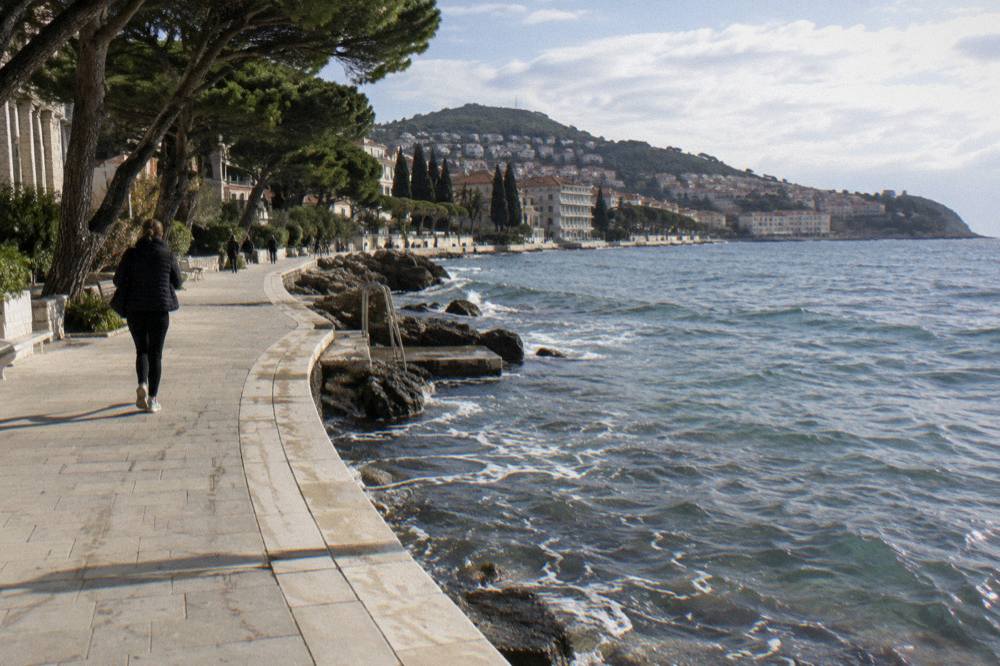
After Gruž the route bends onto the Lapad peninsula and reaches the promenade, the tree-lined pedestrian stretch that gives the walk its pay-off. Because the promenade is a pedestrian zone under the city's public-order decision, the final section is calm ground: the rule that covers this stretch is the carts rule, and wheeled transport carts need soft inflated tyres here. That last rule comes from Article 160(2) of the City's decision on communal order, and it applies to the Lapad promenade and the whole Old Town alike, which matters if you were thinking of dragging a wheeled cart along either end of this route.
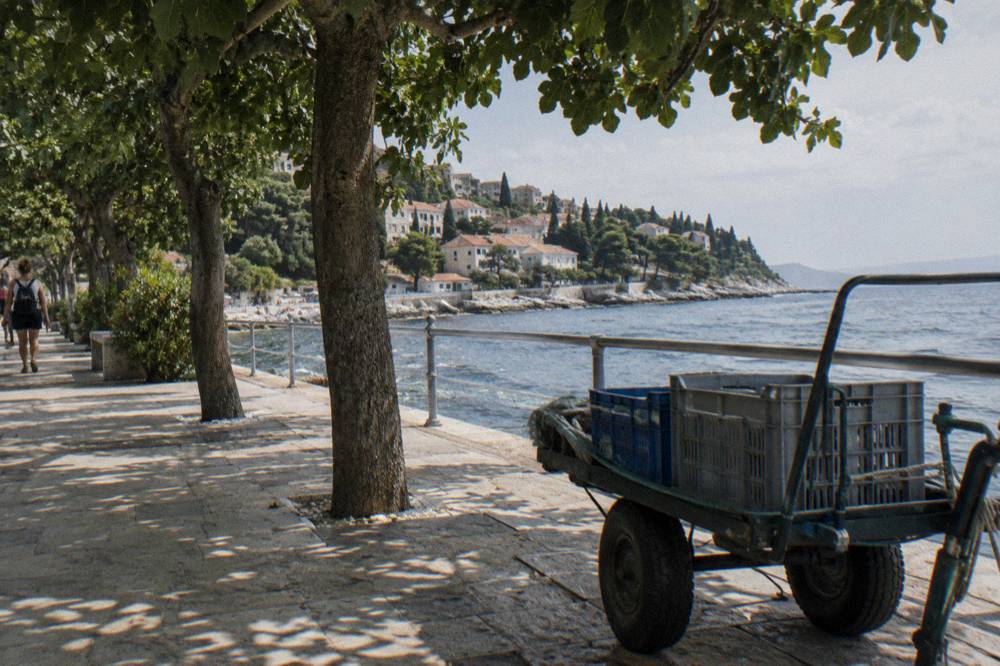
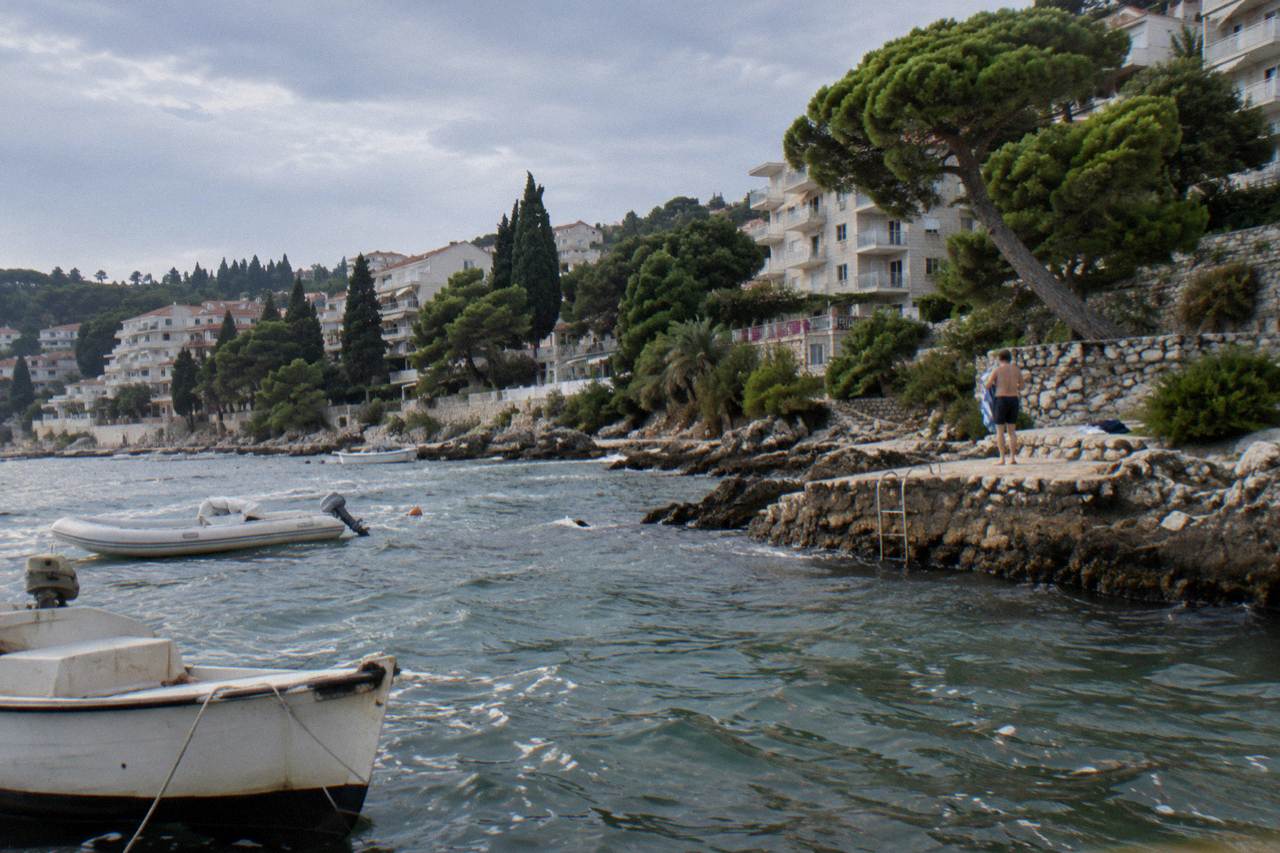
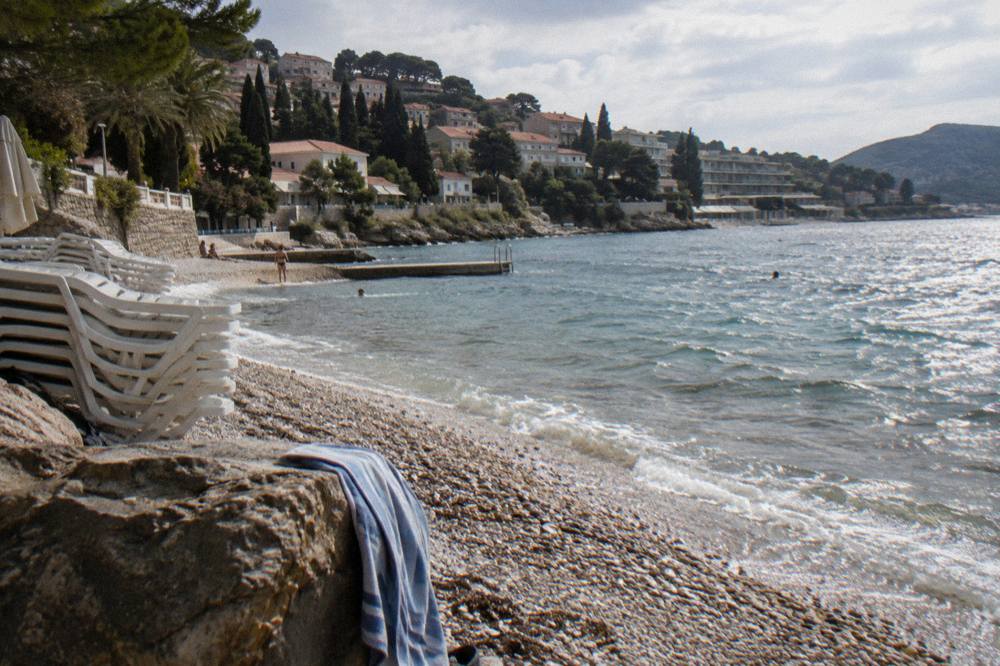
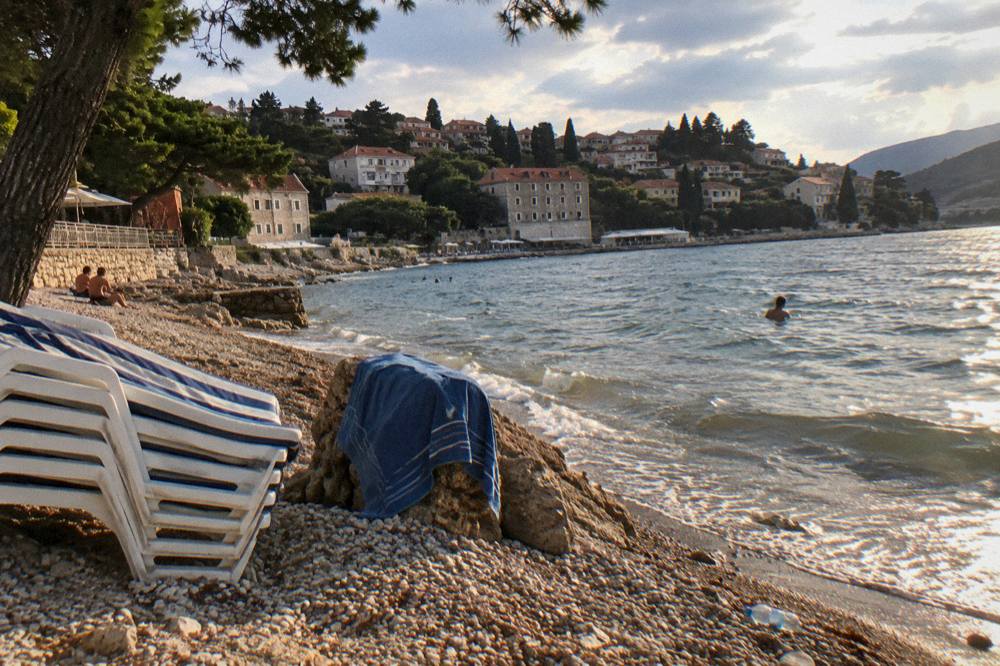
Planning around the day's rhythm makes more sense than planning around a stopwatch. A morning version can catch the produce market at Gruž in full swing; a late afternoon version ends at the shore of Uvala Lapad, where swimming from the public strips is free. The beaches along the peninsula, including Copacabana and the Uvala Lapad beaches, have free shore access, while the loungers and services on them are paid. Sveti Jakov, Danče and Bellevue beaches elsewhere in the city are free too, so if the walk turns into a beach afternoon, nothing about the plan needs to cost money.
Which Route Passes Gruž?
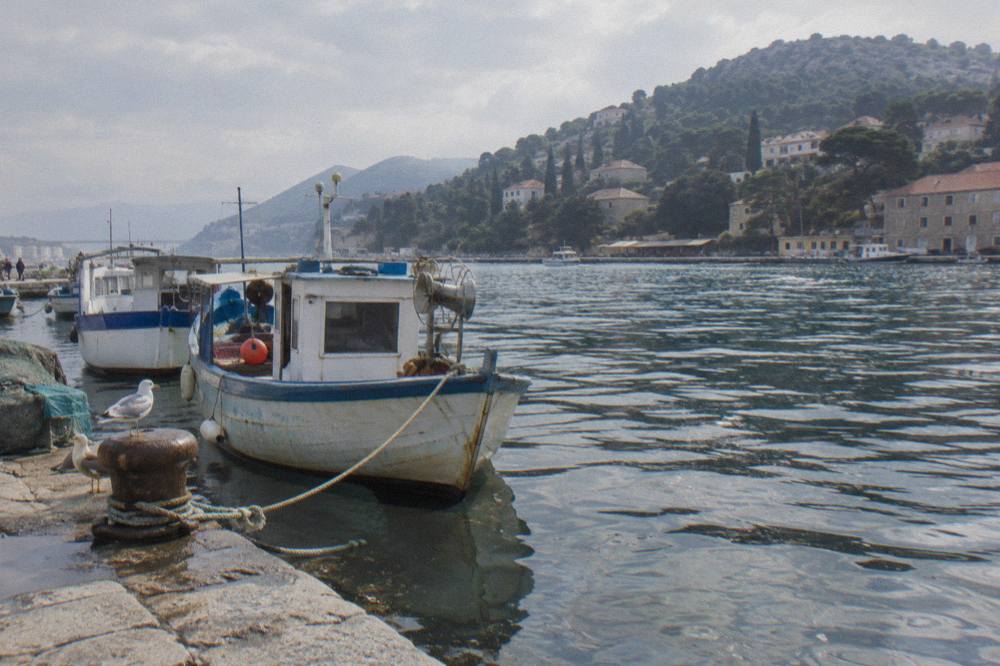
The shoreline route heading west out of the Old Town is the one that passes Gruž, and it is the natural choice for travelers heading that way. Because Gruž sits on the coast between the walled core and the Lapad peninsula, the line runs along the shore, taking you straight to it. Gruž is the city's working harbour and market district, and its two free anchors, the harbour front and the morning produce market, sit directly on the westward path. Taking the Gruž line turns a simple A to B walk into a three part route: Old Town, harbour and market, then promenade. Every part of it is free to enter or see.
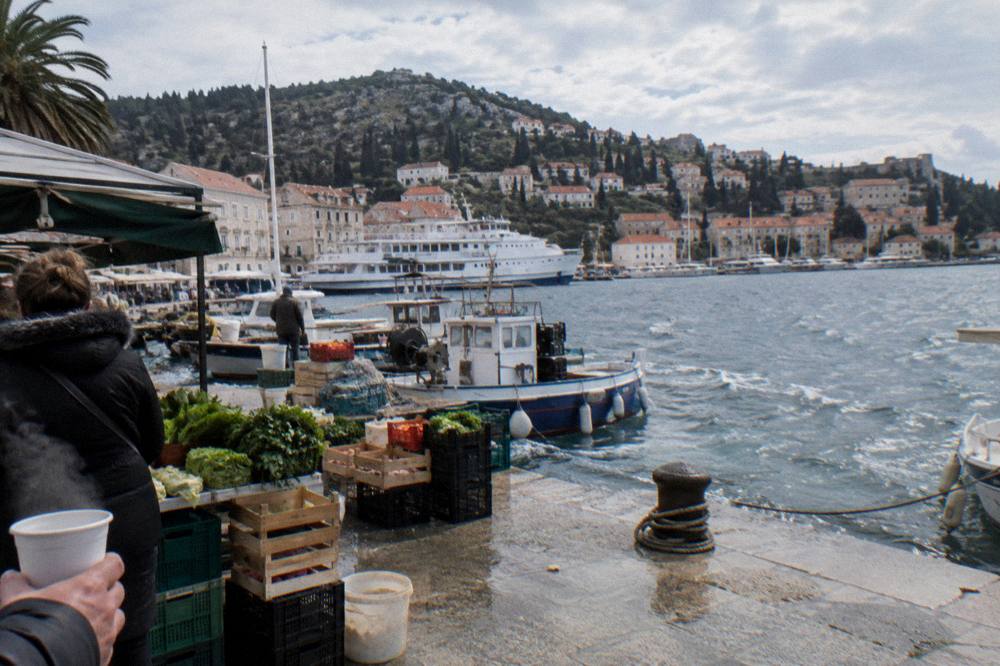
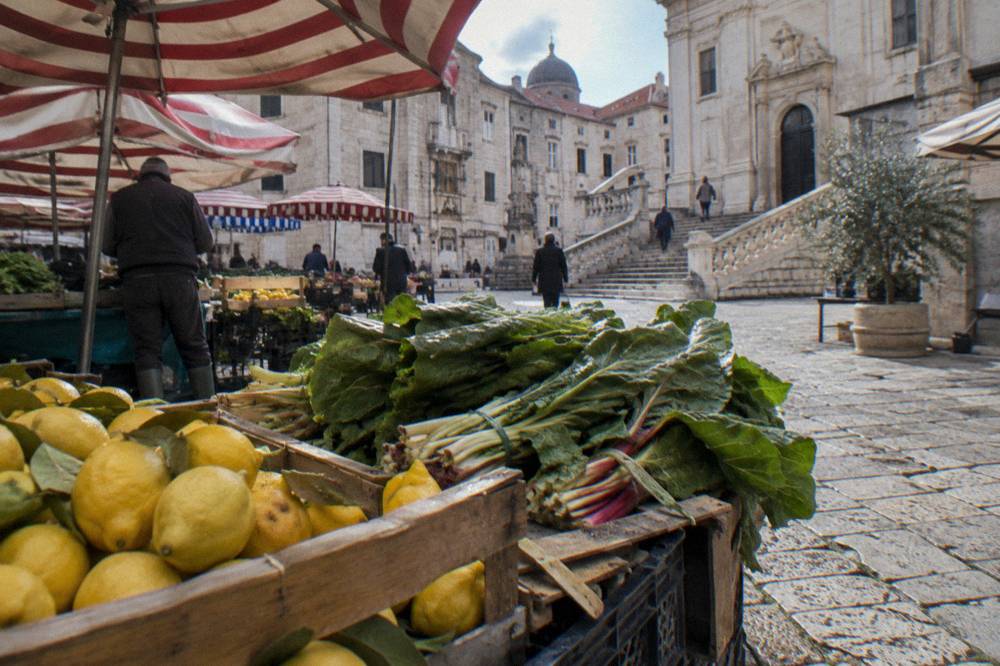
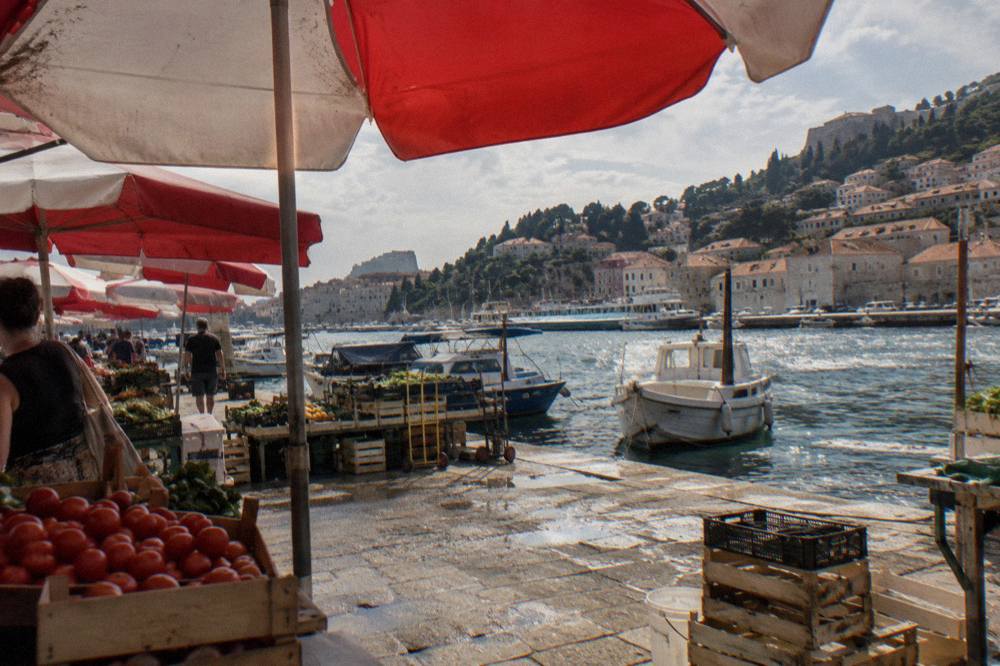
The market deserves its place in the plan. It is free to wander, the purchases are paid, and it gives the walk a purpose beyond scenery: this is where the city provisions itself, and the difference between it and the souvenir streets inside the walls is the whole point of coming this way. The harbour beside it is free to see, with the port functioning as the working end of Dubrovnik rather than a ticketed attraction. If you want a single sentence itinerary for a free morning, it is hard to beat Old Town gates, Gruž market, then the promenade and a free swim at Uvala Lapad.
For anyone building the day around the Old Town first, a free walking tour pairs well before the walk out. Walk With Baka, a local stories walk in English lasting 1 hour 30 minutes, meets at the Amerling Fountain and is free, pay what you want on GuruWalk, rated 4.93 out of 5 across 75 GuruWalk reviews. The meeting point sits inside the Old Town, so the tour finishes where the walk west can begin. Another local stories option, the Free Spirit Local Stories Walk, rated 4.94 out of 5 across 2,029 GuruWalk reviews, meets at Orlando's Column on Luža Square, again putting you inside the walls with the whole afternoon left to reach the sea at Lapad. You can See this free tour on its GuruWalk page.
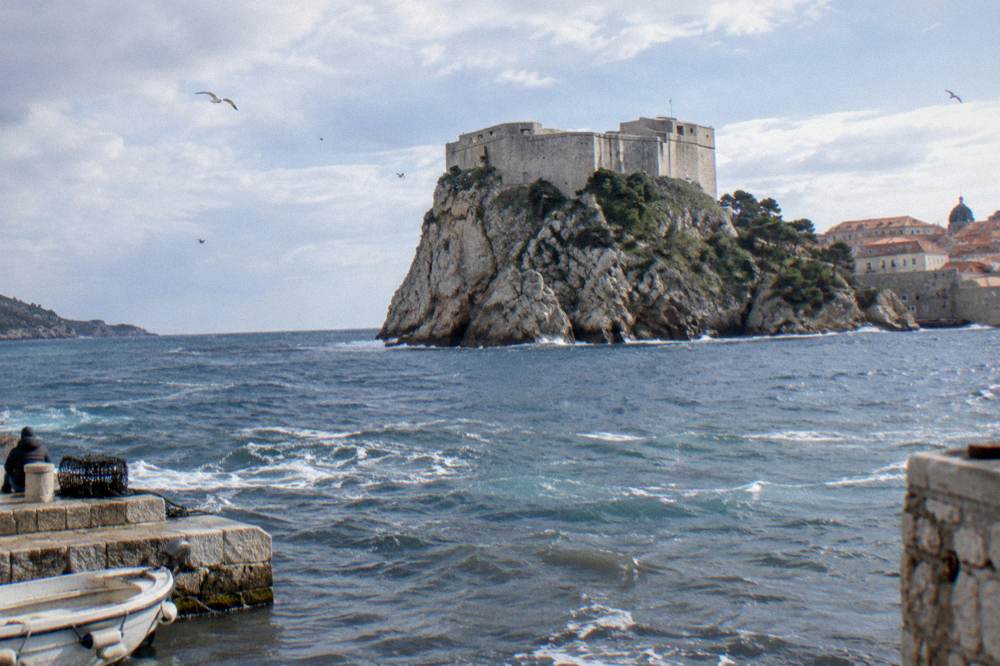
The shore route past Gruž also keeps you honest about what is free and what is not in this city. Gruž market: free entry, paid produce. Lapad promenade: free. Beaches: free shore access, paid loungers. The walls circuit: paid, and from 1 December 2026 the adult ticket drops to EUR 20 from its EUR 40 main season price, with the same single ticket covering Fort Lovrijenac. None of those paid items interrupts the walk, but knowing the splits stops the day from quietly accumulating costs you did not plan for.
There is a seasonal layer worth knowing too. Advent in Dubrovnik runs 28 November 2026 to 3 January 2027, with the main concert programme on Stradun, but the official page does not state whether entry is free, so the walk's start point is festive without being verifiably free to attend in its ticketed sense. In the other direction, Gradac Park, free to enter, reopened on 16 September 2026 after its first full renovation since 1898, adding a free green stop on the city side if your route to the shore passes it.
What Is Free Along The Way?
Everything you pass on this walk is free to see and enjoy, from the Old Town gates and squares to the Stradun, the Gruž harbour front and market, the Lapad promenade, and the shore access at its beaches, so you can take in the whole route without spending anything on sights. The paid things sit beside the route, not on it. The City Walls and Fort Lovrijenac are one paid ticket; the Dubrovnik Museums charge admission; the Franciscan cloister and Old Pharmacy cost EUR 8 while the church itself is free to enter; sunbeds at the Lapad beaches belong to paid operators. The walk itself never charges.
The free list along the route is longer than most visitors expect. On the Old Town end: Stradun, Pile Gate, Ploče Gate, Luža Square, Orlando's Column, the Onofrio fountains, Gundulić Square with its morning produce market, the Old Port and Kase breakwater, and the Jesuit staircase, all free to enter or see. Mid route: Gruž market and harbour, free to wander with paid purchases. On the Lapad end: the promenade, free shore access at Copacabana and the Uvala Lapad beaches, and free swimming from the public strips. The Dubrovnik Cathedral nave is free to enter the church outside Mass, per visitor guides, and St Blaise church is open for sightseeing outside services with no fee, so even the send-off from the Old Town can be a free one. The rest of the planning pages sit on Free Things To Do In Dubrovnik.
| Free Along The Route | Paid Beside It |
|---|---|
| Stradun, Pile Gate, Luža Square | City Walls and Fort Lovrijenac, one ticket |
| Gruž market entry and harbour front | Market purchases |
| Lapad promenade, pedestrian zone | Loungers and beach services |
| Free shore access and swimming | Sunbeds at the club-run beach areas |
| Dubrovnik Cathedral nave outside Mass | Rector's Palace EUR 15, Maritime EUR 10 |
The paid column deserves one clear warning. The City Walls ticket, adult EUR 40 from 1 March to 30 November 2026 and EUR 20 in December and January to February, with child 7 to 18 at EUR 15 and EUR 5 in the respective seasons and children under 7 free, covers the walls circuit and Fort Lovrijenac as one ticket with a single entry and no re-entry. The Dubrovnik Pass, at EUR 40 for one day, EUR 50 for three and EUR 60 for seven per adult, is a paid bundle, not a free thing, and no winter pass is on sale. If your day is a free day, none of this is needed for the Old Town to Lapad walk.
Winter walkers get a slightly different free map. War Photo Limited is closed November to March. The Dubrovnik Museums run winter hours, 9:00 to 16:00 from 1 November to 31 March, with a different closing day per museum: Rector's Palace closed Monday, Ethnographic Museum closed Tuesday, Maritime Museum and Revelin closed Wednesday, and all closed on Christmas, New Year and the Feast of St Blaise. The Western Outer Wall is closed December to February. None of that touches the walk, but it reshapes what you might bolt onto either end of it, and the free dated events of the season, the Feast of St Blaise on 3 February and the Night of Museums on the last Friday of January, both sit in the cold months when the walk is at its quietest.
Is A Bus Faster After A Long Day?
Yes, a city bus can be the better call at the end of a long day, and taking one back from Lapad costs you nothing in the way of missed sights because you will have already walked the route's free highlights in the other direction. Libertas city buses serve the corridor between the Old Town side of the city and the Lapad peninsula, so the return leg does not have to be on foot. The walk rewards fresh legs; the bus rewards tired ones. Both are legitimate, and the free parts of the day do not depend on which you choose.
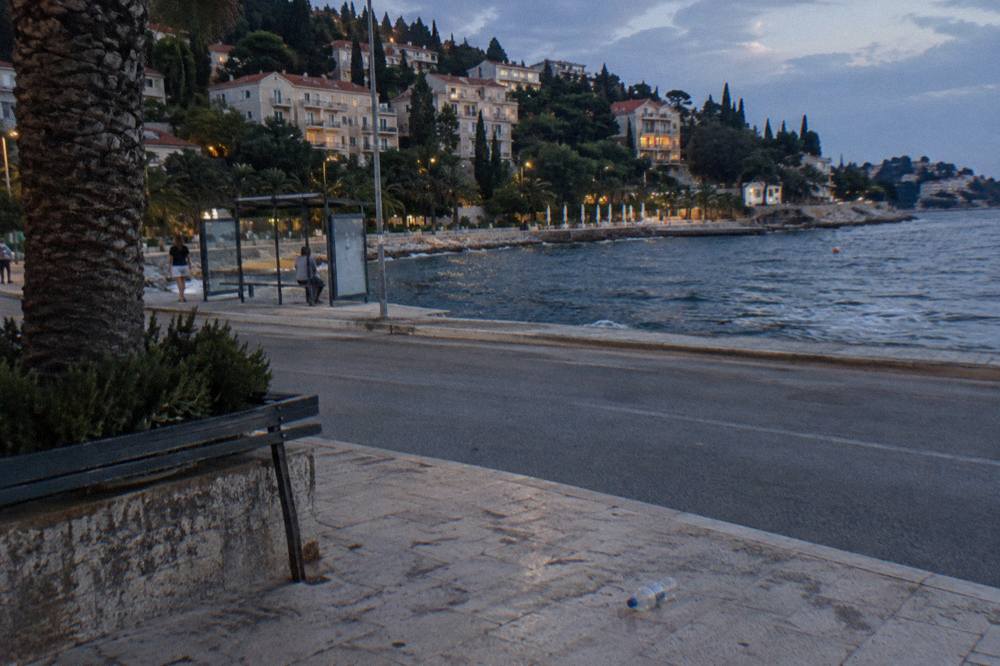
The case for the bus home is simple fatigue management. The morning version of this itinerary, an Old Town walking tour followed by the shoreline route past Gruž and an afternoon on the promenade, is a full day of standing and strolling. The promenade end of the route is flat and car-free, but by evening the appeal of sitting down on the way back is real, and the bus corridor exists precisely for that trip. Nothing about the free itinerary is lost: the market runs in the morning, the promenade stays open, and the shore access at the beaches is not time limited in any way a walker needs to plan around.
The case for walking back is the evening itself. The harbour at Gruž and the shore towards the Old Town are free to see at any hour, and an evening return on foot retraces ground that looks different with the day's traffic gone. There is also the pedestrian zone point again: both the whole Old Town and the Lapad promenade are formally reserved for walkers, so the two most pleasant stretches of the route, at either end, are guaranteed to stay pleasant regardless of the hour.
A note on what you carry, because the same public-order decision that protects the promenade also constrains what rolls on it. Wheeled transport carts without soft inflated tyres are banned in the pedestrian zones, which include the whole Old Town and the Lapad promenade, with fines for a private person of up to about EUR 260 under the City's public-order decision. The text never mentions suitcases and no suitcase fine should be assumed, but a wheeled cart with hard wheels is squarely inside the ban on both ends of this walk. Travel light, or use soft wheels.
Mistakes That Trip People Up On The Lapad Walk
Three recurring mistakes trip people up on the Lapad Walk: visitors assume the paid furniture on the beaches is part of the free shore, assume the walls cost nothing because the streets beneath them are free, and drag hard-wheeled carts onto ground where the City bans them. Each of these has a clean factual answer, and none of them requires guesswork. The walk itself is free end to end; the errors all come from blurring the free thing with the paid or restricted thing sitting next to it.
The first mistake is treating the beach as an all-in free zone. The shore access at Copacabana and the Uvala Lapad beaches is free, and swimming is free, but the loungers and services are paid, and no price needs quoting to make the point: the free part is the shore, not the furniture. The same split applies at Banje Beach on the other side of the city, where swimming is free while the sunbed area belongs to Banje Beach Club, with a sunbed at EUR 30, an umbrella at EUR 10 and a towel at EUR 5. The pattern is consistent across the city's beaches, so learning it once at Lapad saves confusion everywhere else.
The second mistake is walls confusion, and it is the most expensive one. Walking through Pile Gate, along Stradun and beneath the walls is free; the walls circuit itself, with Fort Lovrijenac and Minčeta Tower, is the paid ticket, EUR 40 adult in main season and EUR 20 in December and January to February, children under 7 free, one tour with no re-entry. Nobody on this walk needs that ticket, but plenty of "free things in Dubrovnik" lists blur the line, and the ticket office will not. The third mistake is the cart: the pedestrian zone rules apply at both ends of the route, and the ban on wheeled transport carts without soft inflated tyres is in force on the Lapad promenade just as it is in the whole Old Town. A fourth, smaller error is planning a winter museum stop without checking the closing day: each Dubrovnik museum closes on a different weekday in winter, so Rector's Palace on a Monday is a walk to a shut door.
Common Questions On This Topic
Can You Walk From Dubrovnik Old Town To Lapad?
Yes. The route runs on public ground end to end, free of any ticket or pass. It leaves the Old Town, follows the shore past Gruž with its harbour and morning produce market, and finishes on the Lapad promenade, a pedestrian zone beside the bay. Both districts, and everything between them on this line, cost nothing to enter or see.
Is The Lapad Promenade Free To Walk?
Yes, the Lapad promenade is free to enter, and it is formally a pedestrian zone under the City of Dubrovnik's public-order decision, listed alongside the whole Old Town. That means no wheeled transport carts without soft inflated tyres: the Lapad promenade is a pedestrian zone under the same rule as the Old Town. It is one of the most walker-friendly stretches of ground in the city.
Is Gruž Market Free To Visit?
Yes, Gruž market is free to enter and wander, and only purchases are paid. It is the city's working produce market, and it sits on the shoreline route between the Old Town and Lapad, which makes it a natural stop on the walk. The harbour front beside it is free to see as well.
Are The Lapad Beaches Free?
The shore access is free at Copacabana and the Uvala Lapad beaches, and swimming from the public strips costs nothing. Loungers and beach services are paid, and no price needs to be paid to enjoy the shore itself. Elsewhere in the city, Sveti Jakov, Danče and Bellevue beaches are free too.
Do You Need The Dubrovnik Pass For This Walk?
No. The Dubrovnik Pass is a paid bundle, EUR 40 for one day, EUR 50 for three days and EUR 60 for seven per adult, covering the walls, ten sights and buses, with no winter pass on sale. Nothing on the Old Town to Lapad route requires it or any other ticket. The pass answers a different question from this one.
Can You Take A Cart Or Trolley On The Walk?
No, not if it has hard wheels. The City's public-order decision bans wheeled transport carts without soft inflated tyres in pedestrian zones, which include the whole Old Town and the Lapad promenade, with fines for a private person of up to about EUR 260. The text never mentions suitcases. Soft-wheeled or carried bags are the safe choice.