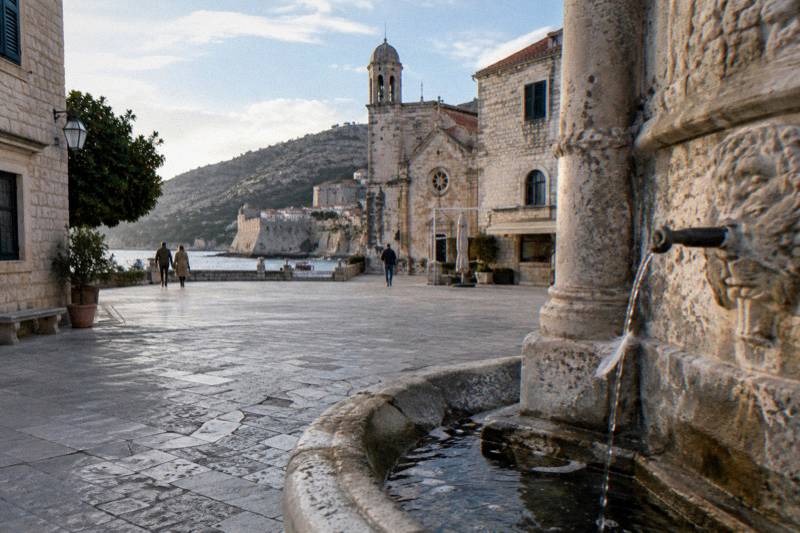
Is The Feast Of St Blaise Procession Free To Watch?
The Feast of St Blaise on 3 February fills Dubrovnik's Old Town with processions, banner raising and church services. Here is exactly what is free to watch and what still costs money.
In Short
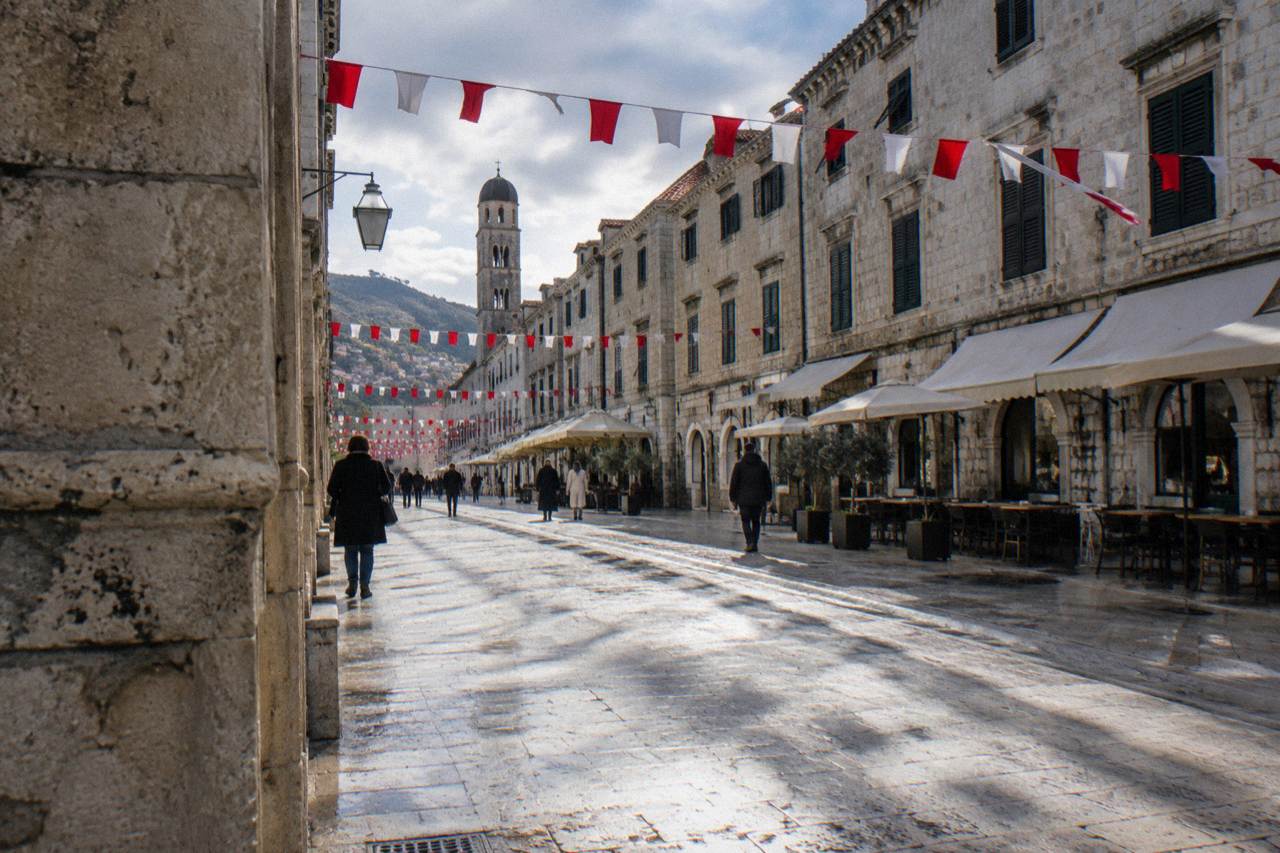
Yes. The Feast of St Blaise falls on 3 February, and the banner raising, the procession and entry to St Blaise church are free to watch or attend. You stand on public streets and squares that are free to be in anyway, above all Stradun and Luža Square. Nothing about the feast itself is ticketed. The paid sights of the city, the walls, the museums, stay paid, and the museums close entirely on the feast day.
This question sits inside the Feast of St Blaise guide, which covers the whole festival. This post answers the one question most visitors ask first: does watching the procession cost anything.
Quick Facts
| Question | Answer |
|---|---|
| Date of the feast | 3 February each year |
| Procession | Free to watch from public streets |
| Banner raising | Free to watch |
| St Blaise church | Open for sightseeing outside services, no fee |
| Dubrovnik Museums on the feast day | Closed |
| City Walls ticket in February | EUR 20 adult, EUR 5 child 7 to 18 |
| Free Old Town walks | 13 free walking tours on GuruWalk |
Is The Feast Of St Blaise Procession Free To Watch?
Yes, watching the Feast of St Blaise procession costs nothing at all. You can stand along the route and enjoy the full spectacle for free, and the same goes for every other public part of the feast, so there are no tickets, fees, or reservations to worry about if you simply want to take in the celebration. The banner raising and the procession take place on the open streets of the Old Town, Stradun and Luža Square among them, and those streets cost nothing to stand in on any day of the year. St Blaise church is open for sightseeing outside services with no fee. There is no ticket, no barrier and no viewing area with a charge anywhere in the feast's public programme.
The feast is the city's own, and its public parts happen in public space. That is the whole reason the answer is so clean. Dubrovnik's Old Town is a living quarter where the main street, the squares, the gates and the fountains are free to enter or see every day, and on 3 February the feast simply fills that same free space. Watching costs the same as walking through Pile Gate on an ordinary morning: nothing.
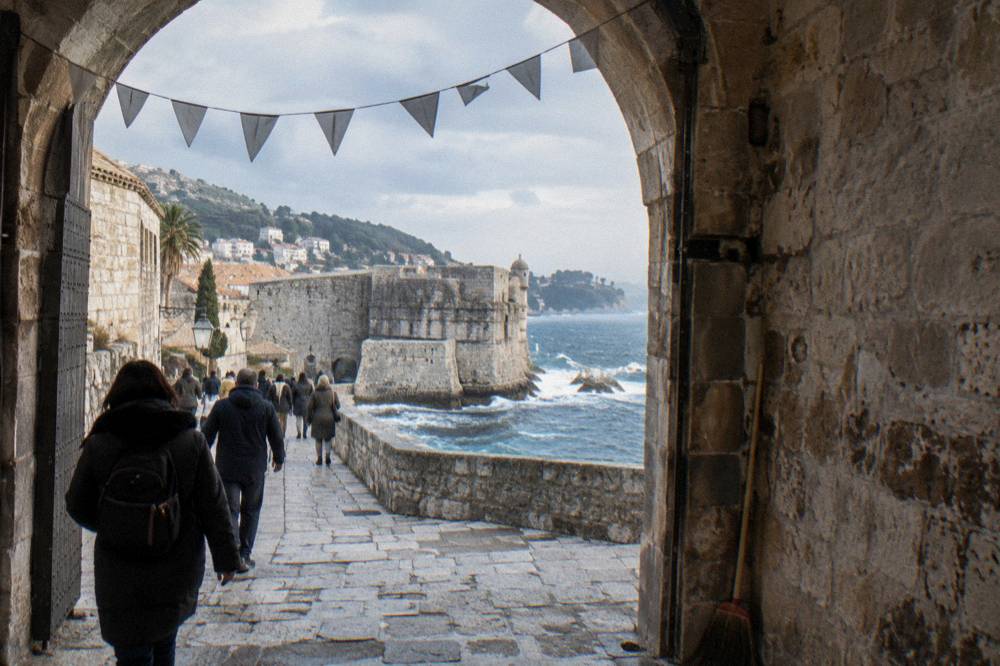
What is worth separating is the feast from everything around it. The feast itself adds no charge to the city. But visitors who come for 3 February often want to see the rest of Dubrovnik too, and there the usual rules apply in full. The City Walls circuit with Fort Lovrijenac is one paid ticket, EUR 20 for an adult in February against EUR 40 in main season, and nothing about the walls is free on any date. The museums charge their usual admission. So the honest framing is: the procession is free, the city around it is a mix.
For context on how the day sits in the Old Town's calendar, the linked guide above carries the fuller picture, and the question of whether the Old Town itself is free covers the everyday baseline that the feast builds on.
If you want the Old Town explained while you are in the city for the feast, there are 13 free walking tours on GuruWalk, every one free and pay what you want. The trio below contrasts the formats: a 1 hour 45 minute classic from Pile Gate rated 4.85 out of 5 across 2,294 GuruWalk reviews, a longer 2 hour walk rated 4.98 out of 5 across 1,302 GuruWalk reviews, and the History and Culture walk, 1 hour 30 minutes from Pile Gate, rated 4.87 out of 5 across 53 GuruWalk reviews.
Where Does The Procession Pass?
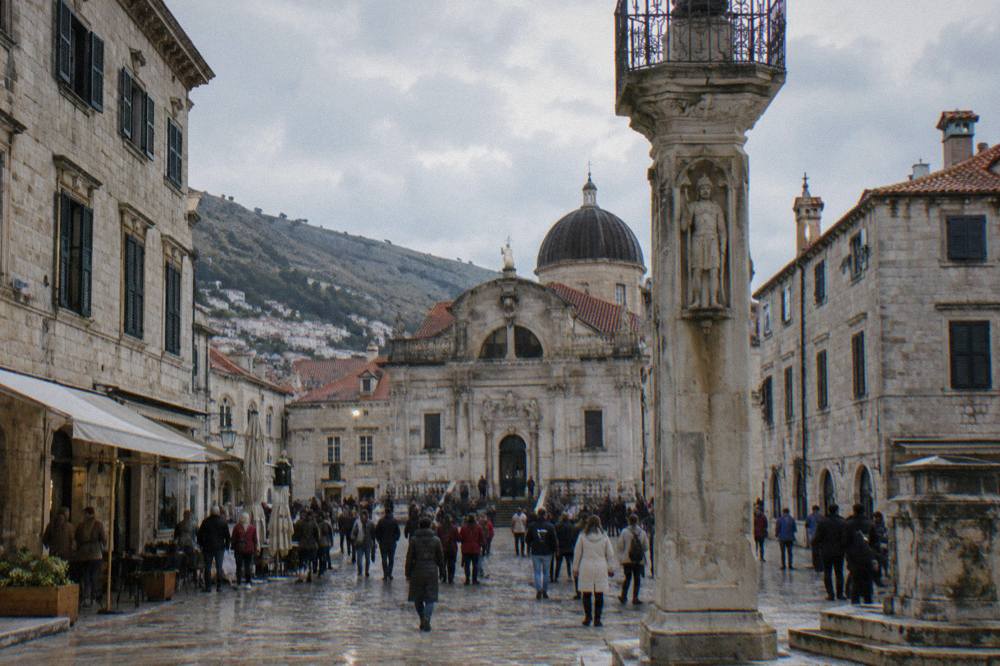
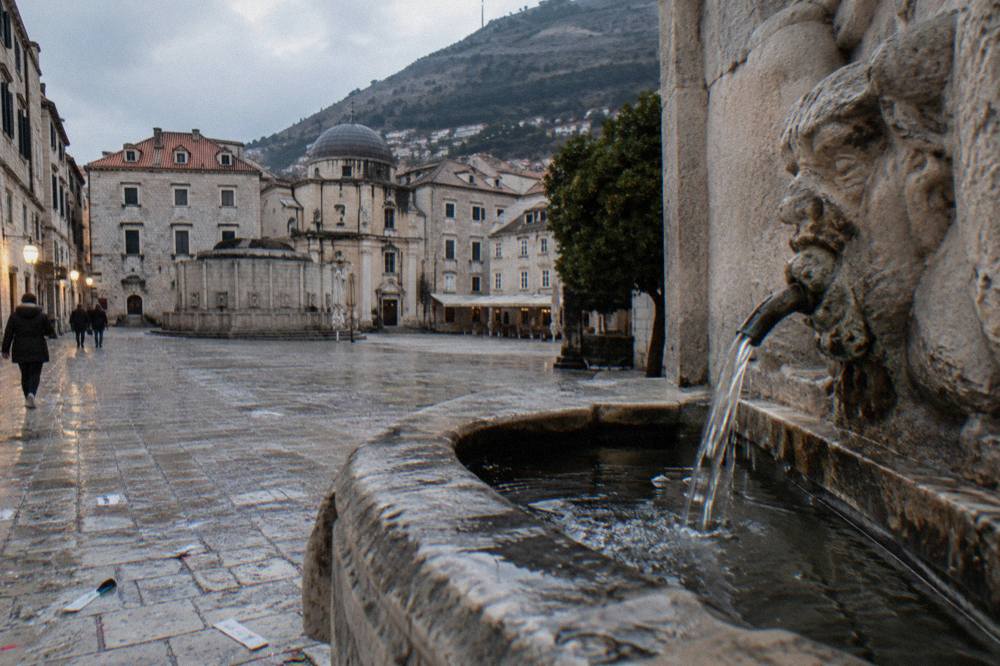
The procession passes through the Old Town, moving along its streets and squares, all of which are public spaces open to everyone. Since the route belongs to the Old Town and its streets and squares are public and free, you can simply find a spot anywhere along the way and watch the procession go by without paying anything. Stradun, the main limestone street, and Luža Square, where Orlando's Column and St Blaise church stand, are free to enter or see on every day of the year, feast day included. The feast's public events, the banner raising and the procession, happen in this open public space, which is precisely why no ticket could apply even in principle.
No verified street-by-street route is published in advance in a form this site can repeat, so the honest advice is simple: the feast centres on the Old Town, and the Old Town is small enough that the procession finds you if you are inside the walls on the day. The spaces that carry the day, Stradun, Luža Square, the gates at Pile and Ploče, the Onofrio fountains, are all free public ground.
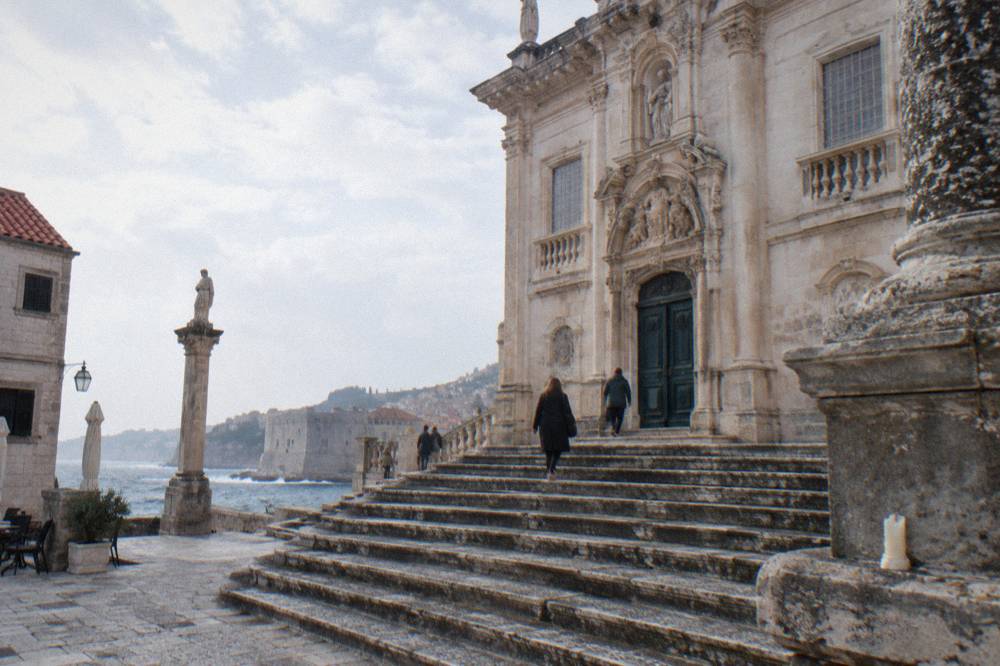
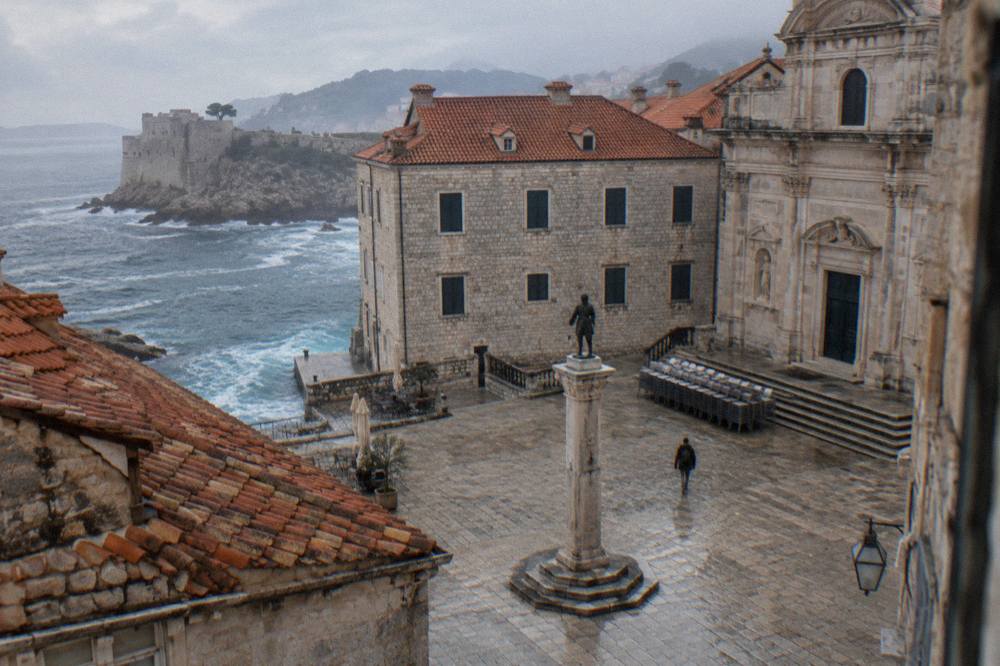
The church itself is the fixed point. St Blaise church, on Luža Square, is open for sightseeing outside services with no fee, and the feast is the one day its patron gives the place its name to. Luža Square around it is free public space, as is Orlando's Column beside it, a meeting point this site's walk list uses on ordinary weeks. The point is that the geography of the feast and the geography of free Dubrovnik are the same geography.
That also means the viewing question answers itself. There are no grandstands, no cordoned paid zones and no reserved stretches in any description of the feast this site's facts support. You stand where there is room, on streets that belong to everyone. The visitor information for the city's winter programme is published by the official tourist board at visitdubrovnik.hr, which is the right place to read the feast-day details as 3 February approaches.
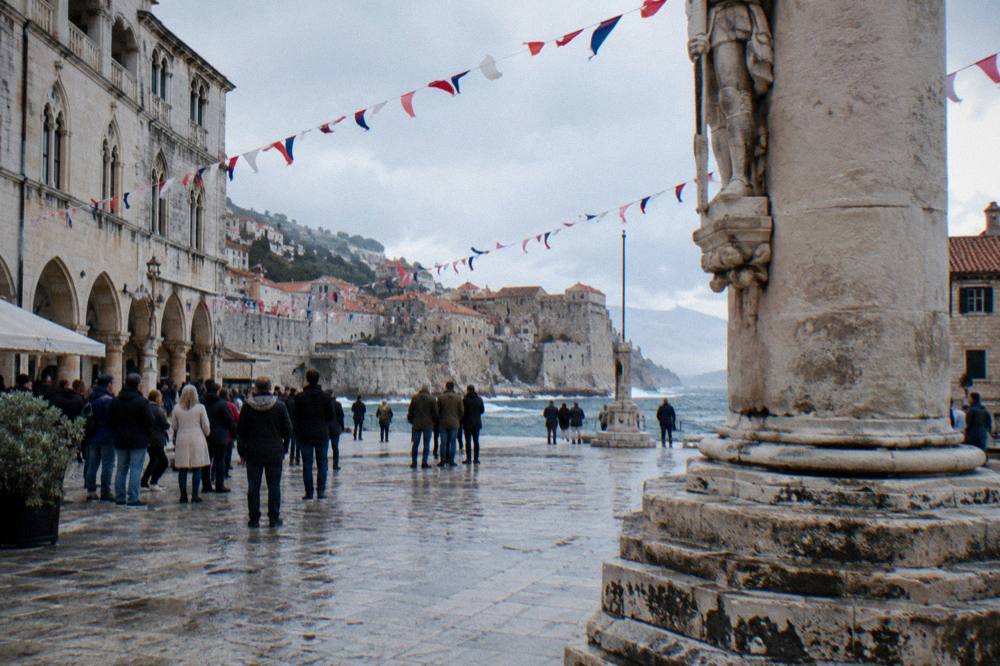
The Pearl of the Adriatic Walk meets in exactly this territory: Pile Gate is its meeting point, it runs 1 hour 45 minutes in English, and it is rated 4.92 out of 5 across 5,844 GuruWalk reviews. It is free, pay what you want, reserved on GuruWalk.
What Time Do People Start Gathering?
No official gathering time is published for the feast's public events, so this is the one part of the day we cannot answer with an exact figure; rather than invent a number, the honest answer is that no schedule exists, and any precise start time you might see elsewhere would be a guess rather than a published fact. What can be said is the date itself, 3 February, and that the banner raising and the procession are the feast's public high points, both free to watch. For times, the official tourist board's pages are the source that will carry them, and anything else would be invention.
This is worth stating plainly because festival posts usually fill this gap with guesswork. The feast's civic and religious programme is set each year by the city and the church, and the parts a visitor cares about, where to stand and when, are exactly the parts that appear in the annual programme rather than in any permanent source. A page that names a precise hour for the procession is guessing unless it quotes that year's programme.
What a visitor can plan around is the shape of the day. The feast is a public holiday in the city's calendar, museums close on the Feast of St Blaise along with Christmas and New Year, and the Old Town fills with people who live there as much as with visitors. February is also the quietest stretch of the visitor year: the Port Authority's own statistics record 2,458 cruise passengers for the whole of December in 2025 against 101,246 in September, so the streets in February belong overwhelmingly to locals.
The gathering question also has a practical free answer: arrive in the Old Town without a schedule and let the day unfold around you. There is nothing to pay for, no entry to time, and no viewing window to buy into. The streets, squares and gates are open public space from morning to night, and the feast moves through them rather than being staged behind a rope.
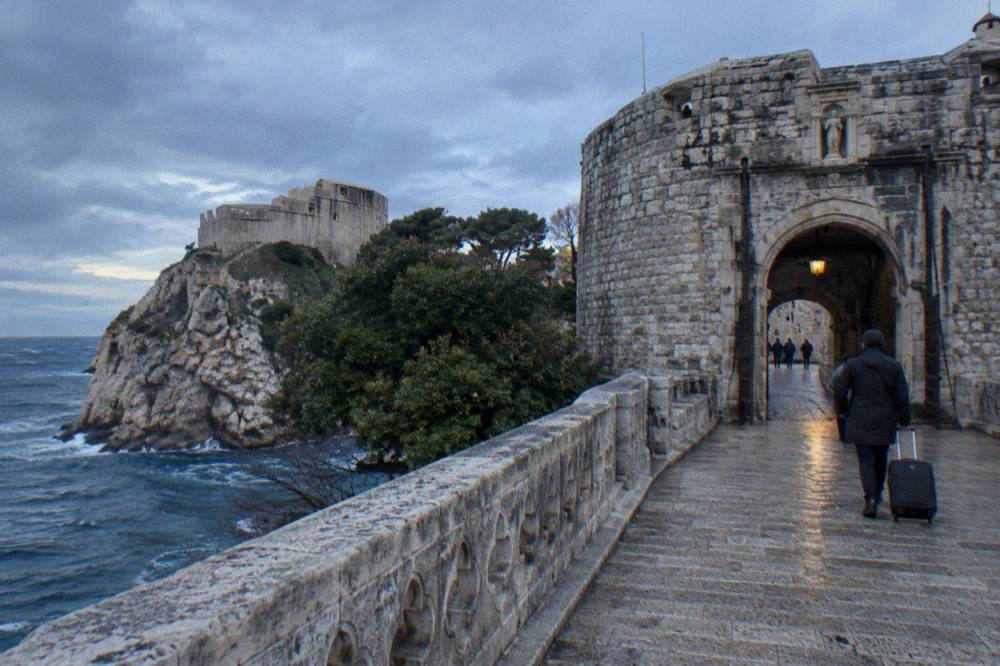
If you want a structured hour and a half in the Old Town on the days around the feast, the History and Culture walk from Pile Gate covers the city's story in 1 hour 30 minutes, in English, free and pay what you want on GuruWalk.
Do You Need A Ticket For Any Part?
No, you do not need a ticket for any part. There is no ticket for the procession, no ticket for the banner raising, and no ticket for the church on the feast day, so you can attend all of these without one. The public parts of the Feast of St Blaise are free to watch or enter. The only tickets a visitor in Dubrovnik on 3 February might buy are the ordinary paid sights, and those follow their ordinary rules: the walls, the museums that are open, the cable car if it is running.
This is where the feast's free status needs its neighbours stated honestly, because a free morning can turn into an expensive afternoon if the paid parts are not understood. The City Walls circuit and Fort Lovrijenac are one ticket, EUR 20 for an adult in February, EUR 5 for a child aged 7 to 18, children under 7 free, and nothing about the walls is free on any date. The Dubrovnik Museums charge their usual prices, Rector's Palace EUR 15, Maritime Museum EUR 10, Ethnographic Museum EUR 8, Revelin EUR 5, when they are open, though on the feast day itself they are closed.
| Part of the feast or city | Cost on or around 3 February |
|---|---|
| Procession | Free to watch |
| Banner raising | Free to watch |
| St Blaise church | No fee, open outside services |
| Stradun and Luža Square | Free public space |
| City Walls with Fort Lovrijenac | EUR 20 adult, EUR 5 child 7 to 18 |
| Dubrovnik Museums | Closed on the feast day |
| Franciscan cloister and Old Pharmacy | EUR 8, closed Sundays in winter |
The church question deserves its own care. St Blaise church is open for sightseeing outside services with no fee, and on the feast day the building is the centre of the celebration, so the ordinary rule and the feast-day reality meet: the church is free, and on 3 February it is also busy with worshippers. The city's other churches follow their own rules, covered in the cathedral and churches guide, and the Franciscan church is free to enter while its cloister and Old Pharmacy cost EUR 8, closed on Sundays in winter.
The one winter free evening worth knowing beside the feast is the Night of Museums on the last Friday of January, 18:00 to 1:00, when museums across the city open free of charge. It falls in the same week or two as the feast, and together they make late January and early February the one stretch of the Dubrovnik year with genuinely free museum access. Museum hours and closing days are published by Dubrovnik Museums.
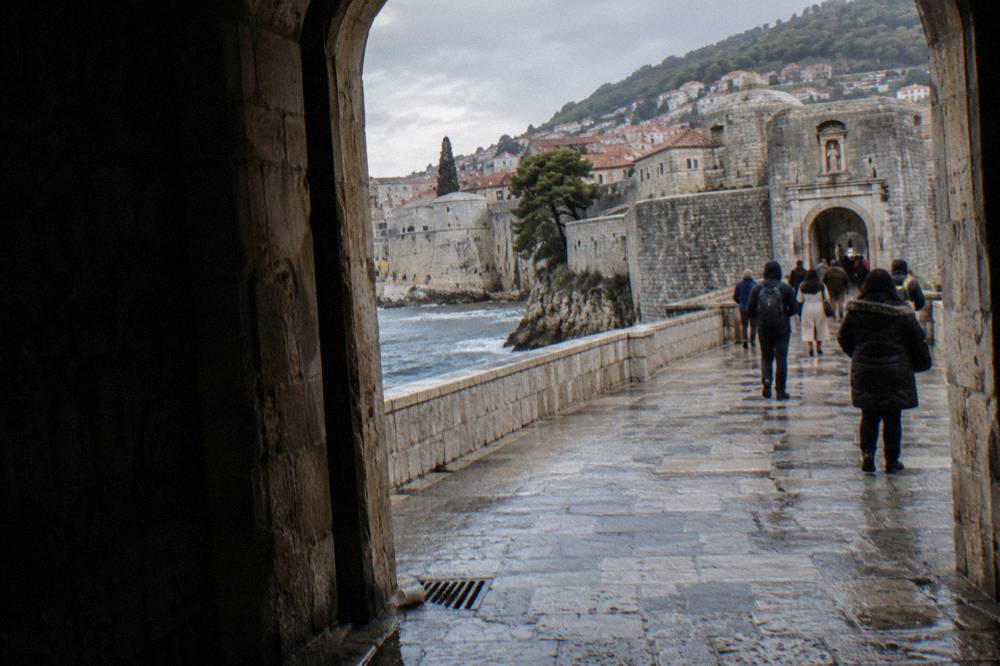
Should you want a guide's hour before or after the feast, the History and Culture free walking tour runs from Pile Gate and pairs naturally with a feast-day visit.
What Is Open Afterward?
Here is the short answer for the feast day itself: the museums are closed, so they are not part of your plans, while the paid walls circuit remains open and continues to run on its February ticket, which means the circuit is still available to visitors on the day. Dubrovnik Museums shut on the Feast of St Blaise along with Christmas and New Year, so the Rector's Palace, the Maritime Museum, the Ethnographic Museum and Revelin are all closed on 3 February. The free parts of the city, the streets, squares, gates, beaches and parks, never close, and the walls and the fort run on the winter ticket of EUR 20 adult and EUR 5 for a child aged 7 to 18.
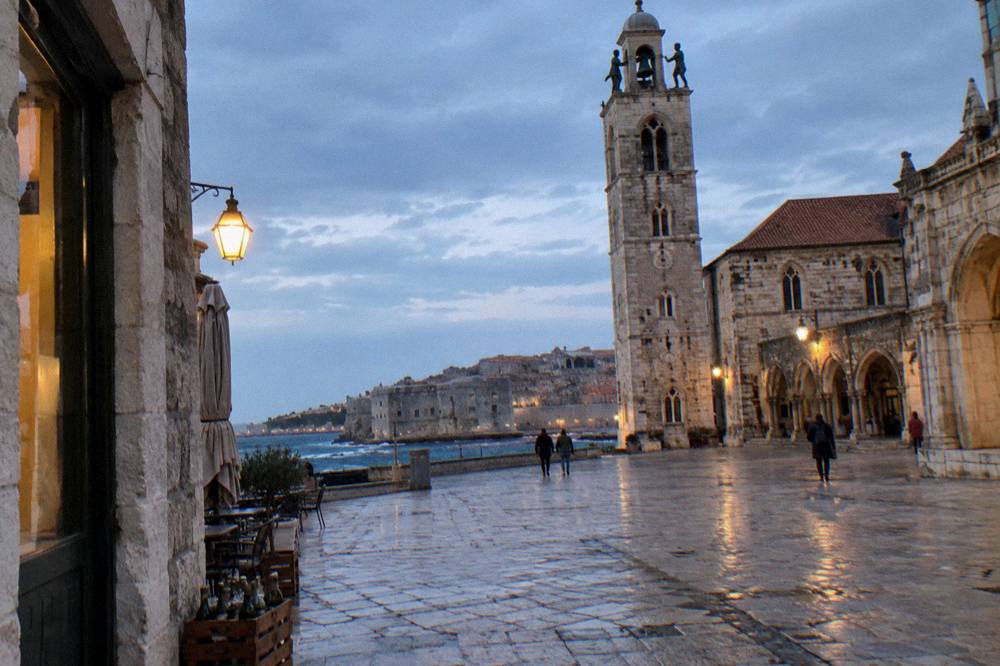
The days around the feast are a mixed picture that rewards knowing the winter calendar. Museums run winter hours from 1 November to 31 March, 9:00 to 16:00, with a different closing day each: the Rector's Palace is closed Monday, the Ethnographic Museum Tuesday, the Maritime Museum and Revelin Wednesday. War Photo Limited is closed for the whole of November to March. The Franciscan cloister and Old Pharmacy keep winter hours of 9:00 to 14:00 and are closed on Sundays from 1 November to 1 April. Plan the paid sights by that calendar and the free feast day by its own.
The free layers of the city carry a feast-day visit well beyond the procession itself. Stradun, Pile Gate, Ploče Gate, Luža Square, the Onofrio fountains, Gundulić Square with its morning produce market, the Old Port and the Jesuit staircase are all free to see. The beaches stay free and open, Sveti Jakov reached by about 160 steps, Danče and Bellevue beside them, and Gradac Park above them all. The full spread is in the free things on a budget guide.
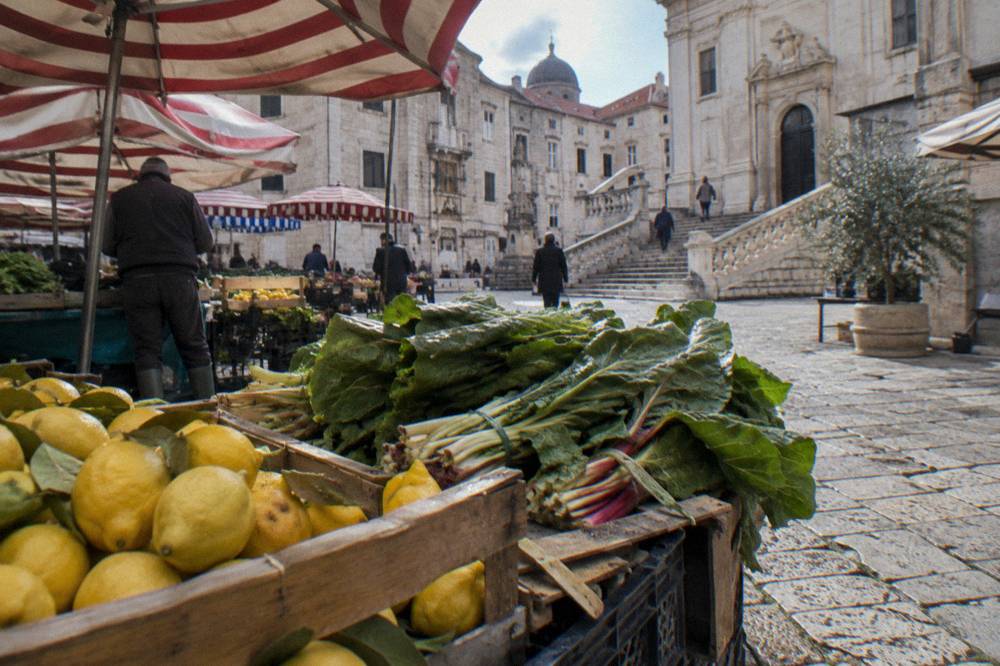
For the deeper local angle on the city that celebrates this feast, the local-stories walks each give a different hour of Old Town storytelling on GuruWalk, free and pay what you want.
Mistakes That Trip People Up At The Feast Of St Blaise
The most common mistakes all trace back to a single error: assuming that because the feast itself is free, everything around it comes free too. Visitors budget for nothing beyond the celebrations, then get caught out when the surrounding sights carry their own costs, and that surprise can strain both wallets and schedules in the middle of an otherwise joyful occasion. The procession is free, but the walls are not, the museums are closed rather than free on the day, and the Dubrovnik Pass is not a winter saver. Each of those is a real, data-backed trap, and each costs a visitor either money or a wasted walk across town.
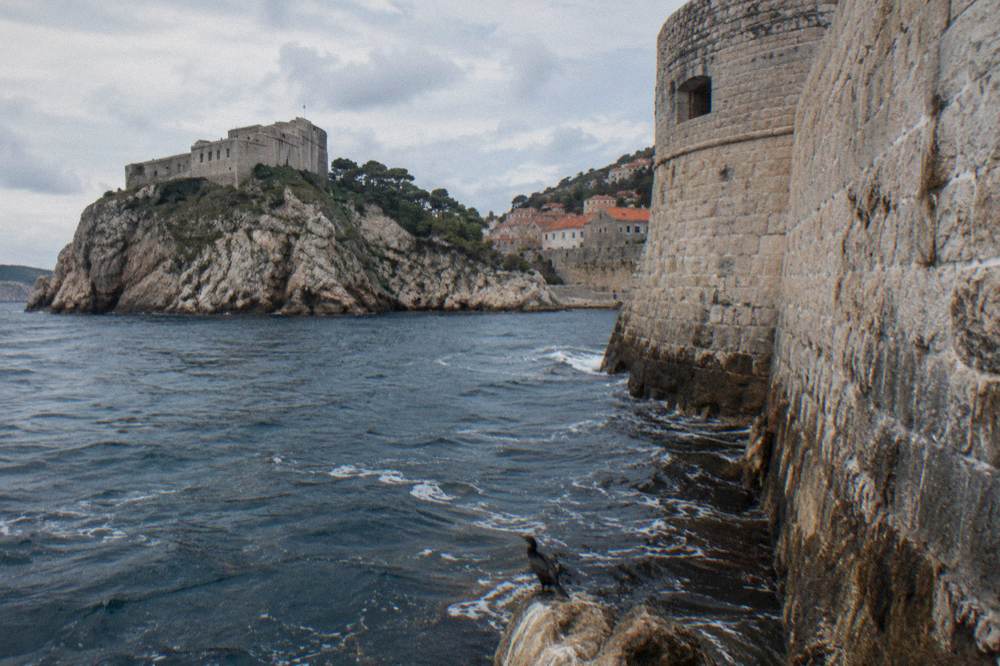
The first mistake is treating the feast day as a museum day. The museums close on the Feast of St Blaise, so a visitor who plans the Rector's Palace or the Maritime Museum for 3 February arrives at a shut door. The second is buying the Dubrovnik Pass for a February visit on the strength of the walls: no winter pass is on sale, while the December-to-February walls ticket falls to EUR 20, less than the EUR 40 the 1-day pass costs in season. The third is the classic: expecting some part of the walls circuit to be free because the rest of the day is. Walking beneath the walls, through Pile Gate and along Stradun, is free; the walls circuit with Fort Lovrijenac and Minčeta Tower is the one ticket.
A fourth mistake is assuming the winter Old Town is shut. It is not. The feast itself is proof, a February celebration that fills the free streets, and the winter calendar carries the Night of Museums in January alongside it. The fifth is small but real: expecting the feast to be staged in a ticketed venue. It is staged in the open city, which is exactly why Free Things To Do In Dubrovnik exists as a site at all: the best of this city's public life, this feast chief among it, happens in space nobody charges for.
Common Questions On This Topic
Is The Feast Of St Blaise Procession Free To Watch?
Yes. The banner raising, the procession and entry to St Blaise church on 3 February are all free. They take place in the Old Town's public streets and squares, above all Stradun and Luža Square, which are free to be in on every day of the year. No ticket or viewing charge exists.
When Is The Feast Of St Blaise Held?
The feast falls on 3 February each year. It is a public occasion in the city's calendar, and Dubrovnik Museums close on the day, as they do on Christmas and New Year. The banner raising and the procession are the public high points, both free to watch.
Can You Go Inside St Blaise Church For Free?
Yes. St Blaise church is open for sightseeing outside services with no fee, and that holds on the feast day too. The church stands on Luža Square beside Orlando's Column, both free public space, so there is nothing to buy to reach the door.
Are The City Walls Free During The Feast?
No. Nothing about the walls circuit is free on any date. The walls and Fort Lovrijenac are one ticket, EUR 20 for an adult in February and EUR 5 for a child aged 7 to 18, with children under 7 free. Walking beneath the walls along Stradun costs nothing.
What Time Does The Procession Start?
No official start time is published in a permanent source this site can quote, so the answer depends on each year's programme. The date is fixed, 3 February, and the official tourist board's pages carry the annual details. Arriving in the Old Town without a rigid schedule is the practical approach.
What Else Is Free In Dubrovnik In February?
Plenty. The streets, gates, squares, fountains, the Old Port and the beaches are all free, Sveti Jakov reached by about 160 steps among them. The Night of Museums on the last Friday of January, 18:00 to 1:00, is the one free museum evening of the year, and 13 free walking tours run on GuruWalk, pay what you want.